Context
Agentic AI design in complex B2B SaaS
PM and Developers
2025
My role
- Led end-to-end product design of agentic AI
- Defined AI as a system entity (identity, navigation, dedicated surface)
Result
- Transformed backend AI capability into a trustworthy, productized experience
- Established reusable agentic AI patterns within the design system
Reusable knowledge
- Agentic AI must be treated as a system actor
- Visibility should scale with user intent
- Design translates AI capability into user's habitual usage.
Overview
In data-heavy B2B SaaS, the success of agentic AI depends less on model capability and more on how it is productized into existing workflows.
This showcase captures key design principles learned while designing an agentic AI for a Workforce Management platform.
Agent as a product entity
Users are expected to interact with the AI as a collaborator, as the agent AI can help user:
- Understand complex data and insights
- Take action on insights without leaving the workflow
To support this mental model, the agent must exist as a first-class product entity, not a transient UI pattern.
Design considerations include:
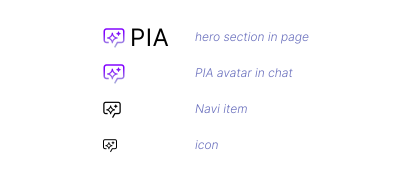
- A name and visual identity
- Persistent presence in navigation
- A dedicated surface that signals legitimacy
Without these signals, users struggle to understand what the AI is and when to rely on it.
Principle: agentic AI should be designed as a product entity, not an interaction experiment.
Visual identity interation

Visual system
Progressive commitment: visibility vs. disruption
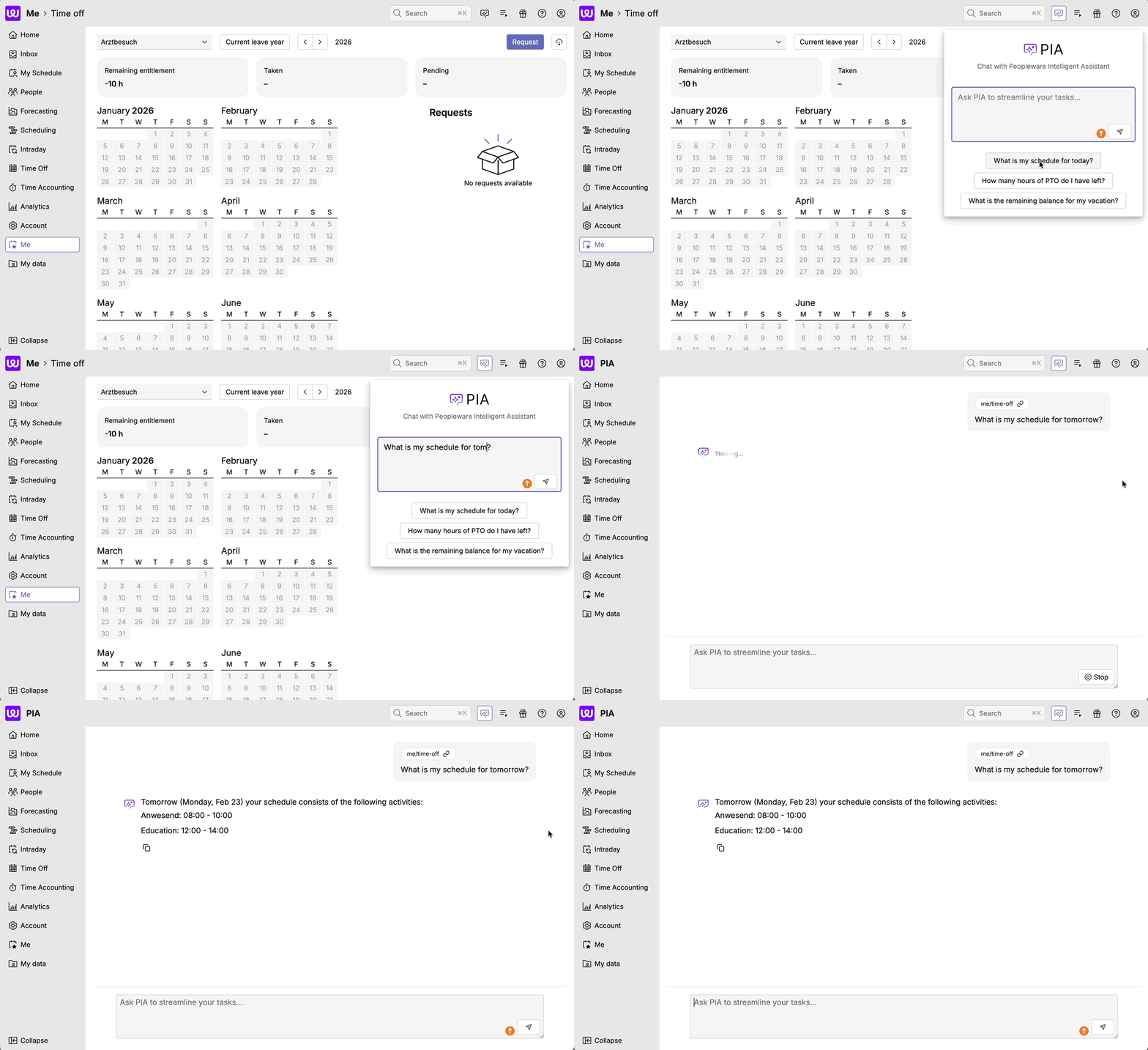
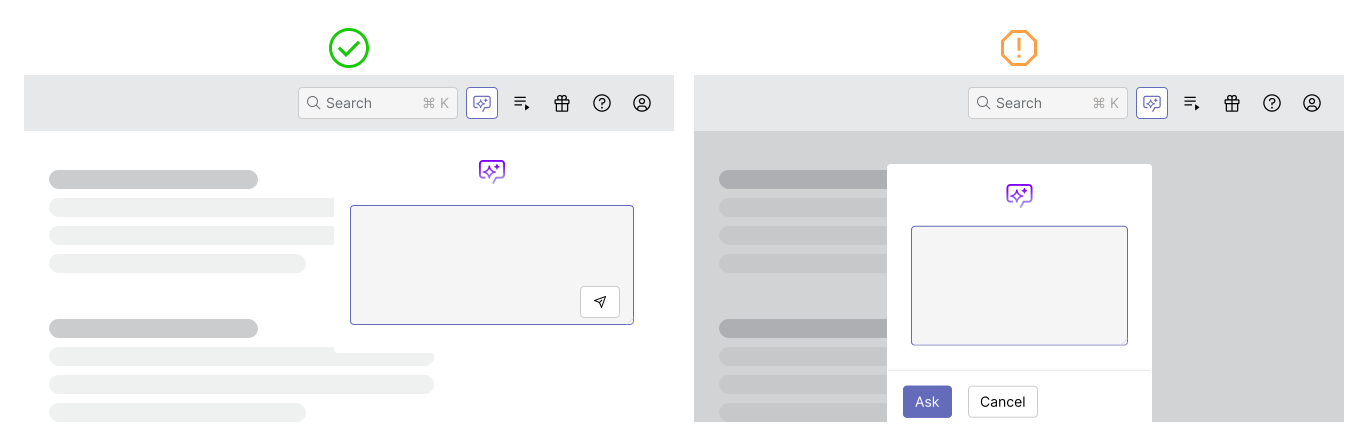
Constant AI visibility can disrupt focus in operational tools. A progressive entry model balances discoverability and concentration.
- Lightweight access (e.g. popover) for exploration, rest of content is rearchbale.
- Transition to a dedicated page only after intent is shown
- Clear escalation from assist to engage deeply
This approach respects users’ primary tasks while keeping AI reachable.
Principle: visibility should scale with intent, not novelty.
Pattern convergence is a Strength
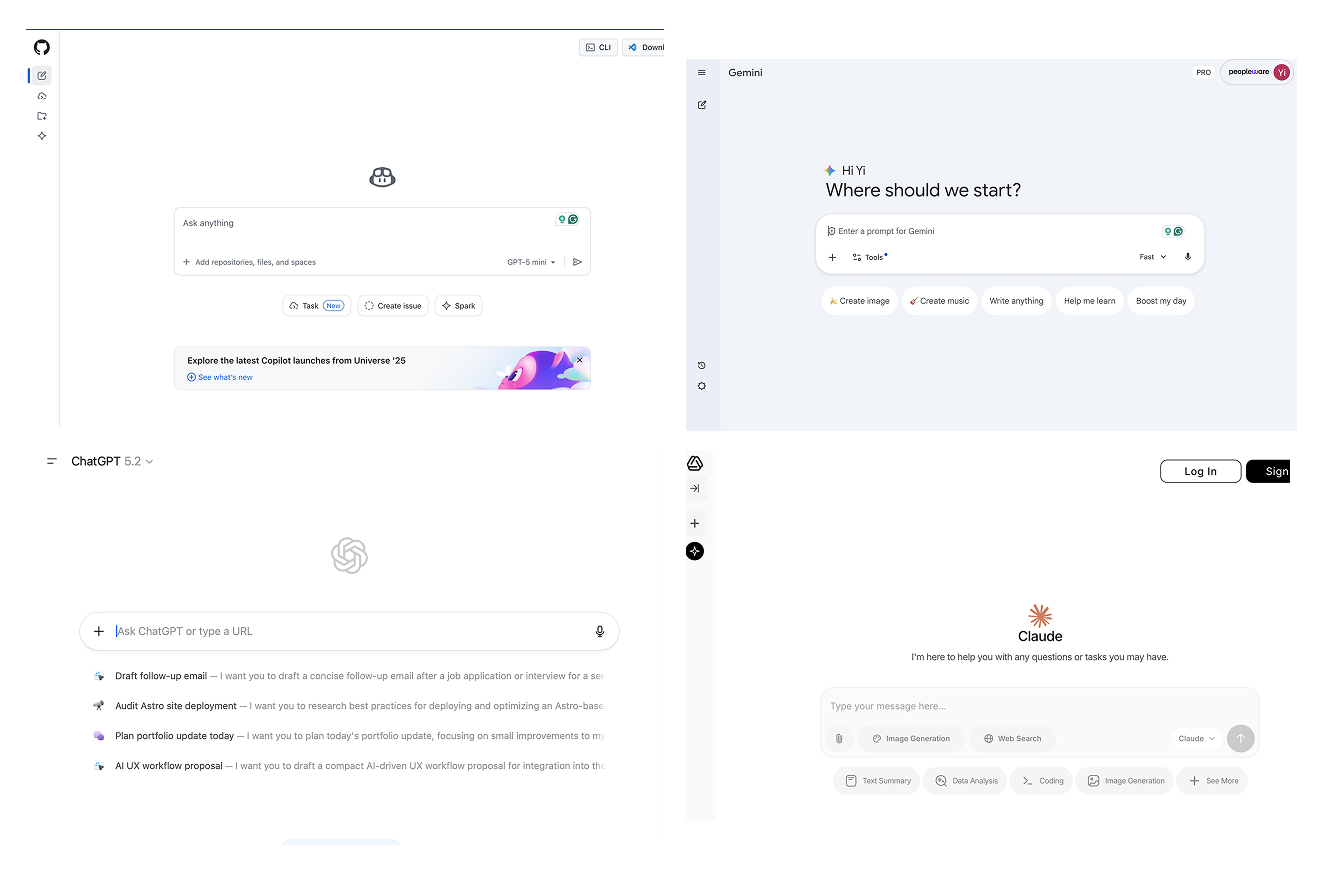
Across products (e.g. Google, GitHub), agentic AI interfaces increasingly converge on similar structures.
Common patterns include:
- Persistent navigation entry
- Named agent with visual presence
- Hero section on the AI page
- Conversational layout with clear turn separation
These patterns are not a lack of creativity — they are structurally necessary for predictability and trust.
Principle: predictability comes first; differentiation comes from context and integration depth.
Designing AI output for reading
In B2B SaaS, AI output is work material, therefore, the accessibility is over consistency. Design priorities include:
- Readable typography and spacing: product default font-size is 14px, AI is 16px.
- Clear visual rhythm and grouping
- Strong scanning affordances
- Stable visual anchors (e.g. avatar placement)
These choices directly affect comprehension, trust, and reuse. Principle: AI output in professional tools must optimize for reading and scanning, not conversational charm.

Product design as the adoption layer
Backend systems define what the AI can do.
Product design determines whether users:
- Understand what it is
- Know when to use it
- Integrate it into daily work
Design translates AI capability into habitual usage.
Principle: Product design is the bridge between AI capability and real adoption.
Outcome
- Clear mental model of the AI as a system actor
- Reduced cognitive friction when engaging with AI
- Stronger trust and reuse in daily operational workflows
When designed well, agentic AI stops feeling like “an AI feature” and starts functioning as a reliable team member inside the product.